University of California Press

About the Book

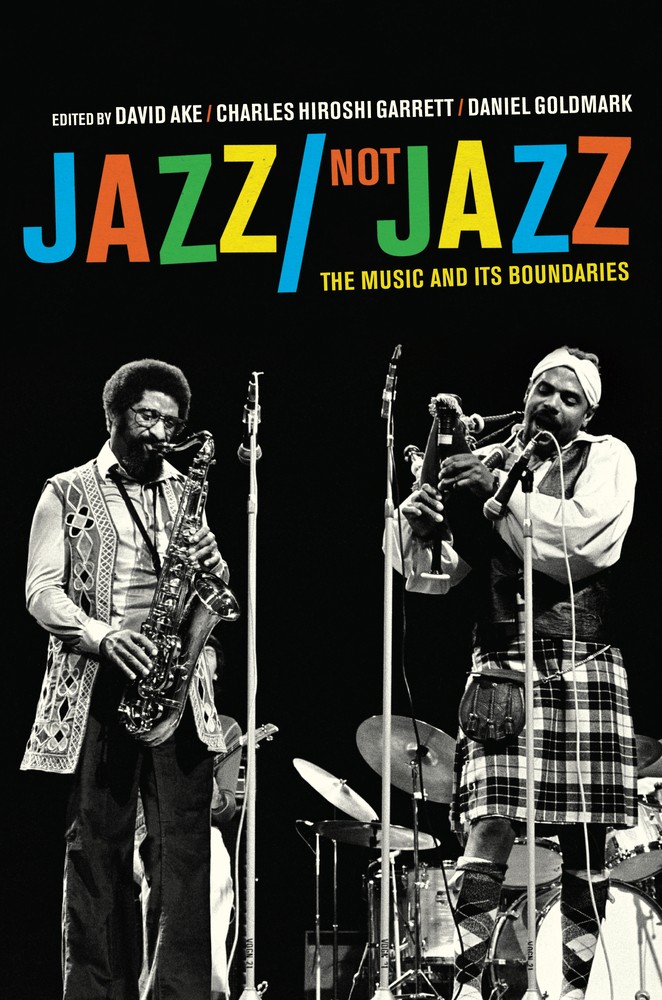
What is jazz? What is gained—and what is lost—when various communities close ranks around a particular definition of this quintessentially American music? Jazz/Not Jazz explores some of the musicians, concepts, places, and practices which, while deeply connected to established jazz institutions and aesthetics, have rarely appeared in traditional histories of the form. David Ake, Charles Hiroshi Garrett, and Daniel Goldmark have assembled a stellar group of writers to look beyond the canon of acknowledged jazz greats and address some of the big questions facing jazz today. More than just a history of jazz and its performers, this collections seeks out those people and pieces missing from the established narratives to explore what they can tell us about the way jazz has been defined and its history has been told.

About the Author

David Ake is Professor and Chair of the Department of Musicology at the Frost School of Music, University of Miami. Charles Hiroshi Garrett is Associate Professor of Music at the University of Michigan and the author of Struggling to Define a Nation: American Music in the Twentieth Century, (UC Press). Daniel Goldmark is Associate Professor of Music at Case Western Reserve University. He is the author and co-author of three books for UC Press: Tunes for ‘Toons, Beyond the Soundtrack, and Funny Pictures: Animation and Comedy in Hollywood

Table of Contents

List of Illustrations
Acknowledgments

Introduction

Part One. Categories
1. Incorporation and Distinction in Jazz History and Jazz Historiography
Eric Porter

2. Louis Armstrong Loves Guy Lombardo
Elijah Wald

3. The Humor of Jazz
Charles Hiroshi Garrett

4. Creating Boundaries in the Virtual Jazz Community
Ken Prouty

5. Latin Jazz, Afro-Latin Jazz, Afro-Cuban Jazz, Cubop, Caribbean Jazz, Jazz Latin, or Just . . . Jazz: The Politics of Locating an Intercultural Music
Christopher Washburne

Part Two. Practices
6. Jazz with Strings: Between Jazz and the Great American Songbook
John Howland

7. “Slightly Left of Center”: Atlantic Records and the Problems of Genre
Daniel Goldmark

8. The Praxis of Composition-Improvisation and the Poetics of Creative Kinship
Tamar Barzel

9. The Sound of Struggle: Black Revolutionary Nationalism and Asian American Jazz
Loren Kajikawa

Part Three. Education
10. Voices from the Jazz Wilderness: Locating Pacific Northwest Vocal Ensembles within Jazz Education
Jessica Bissett Perea

11. Crossing the Street: Rethinking Jazz Education
David Ake

12. Deconstructing the Jazz Tradition: The “Subjectless Subject” of New Jazz Studies
Sherrie Tucker

Contributors
Index
Reviews

“A sterling collection of writings to discuss the transient topic of jazz and its moving-target definitions. . . . As a whole, the essayists deliver content that is laser-focused on the book's title, and there are no misfires. This collection will be useful for decades to come. . . . Highly recommended.”
Choice
"it will be interesting to observe the impact that this collection of unusual, entertaining and thought-provoking perspectives has on jazz studies."
Popular Music
Jazz/Not Jazz is an innovative and inspiring investigation of jazz as it is practiced, theorized and taught today. Taking their cues from current debates within jazz scholarship, the contributors to this collection open up jazz studies to a transdisciplinarity that is rich in its diversity of approaches, candid in its appraisals of critical worth, transparent in its ideological suppositions, and catholic in its subjects/objects of inquiry.”—Kevin Fellezs, author of Birds of Fire: Jazz, Rock, Funk and the Creation of Fusion.

“This collection is a delight. Each essay opens up some previously ignored aspect of jazz history. Anyone who knows the New Jazz Studies and is wise enough to acquire this book will immediately devour it.”—Krin Gabbard, author of Hotter Than That: The Trumpet, Jazz, and American Culture.

“This volume is truly one of a kind, eminently readable and filled with new insights. It will make an extremely important contribution to jazz literature.”—Jeffrey Taylor, Director, H. Wiley Hitchcock Institute for Studies in American Music, Brooklyn College.