University of California Press

About the Book

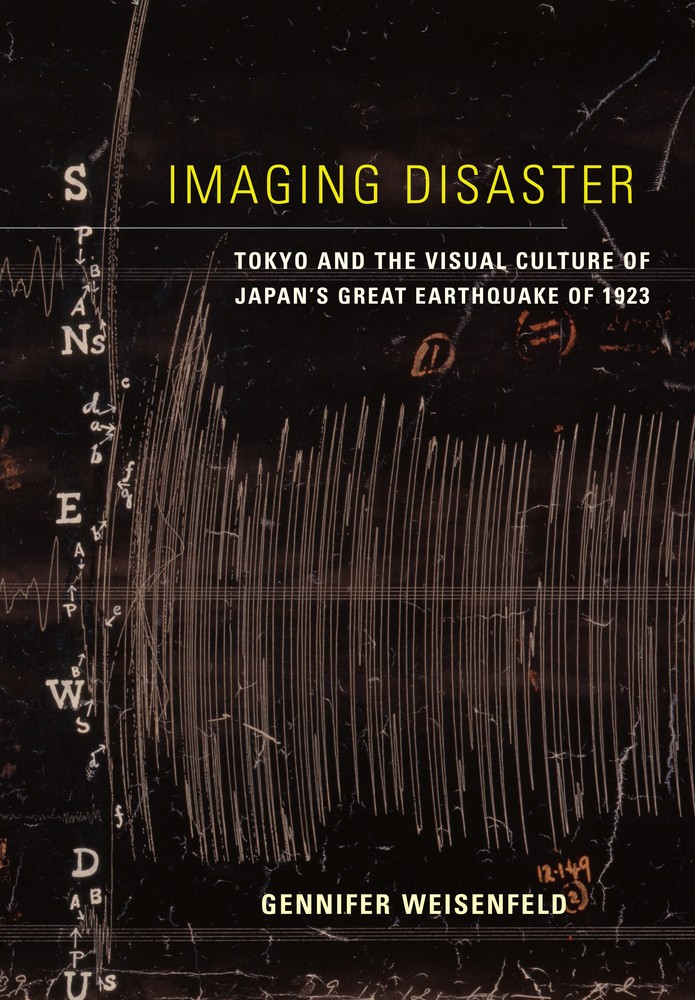
Focusing on one landmark catastrophic event in the history of an emerging modern nation—the Great Kanto Earthquake that devastated Tokyo and surrounding areas in 1923—this fascinating volume examines the history of the visual production of the disaster. The Kanto earthquake triggered cultural responses that ran the gamut from voyeuristic and macabre thrill to the romantic sublime, media spectacle to sacred space, mournful commemoration to emancipatory euphoria, and national solidarity to racist vigilantism and sociopolitical critique. Looking at photography, cinema, painting, postcards, sketching, urban planning, and even scientific visualizations, Weisenfeld demonstrates how visual culture has powerfully mediated the evolving historical understanding of this major national disaster, ultimately enfolding mourning and memory into modernization.

About the Author

Gennifer Weisenfeld is Associate Professor in the Department of Art, Art History & Visual Studies at Duke University and the author of Mavo: Japanese Artists and the Avant-Garde, 1905-1931 (UC Press).

Table of Contents

Preface
Acknowledgments

Introduction
1. Earthquakes in Japan: A Brief Prehistory
2. The Media Scale of Catastrophe
3. Disaster as Spectacle
4. The Sublime Nature of Ruins
5. Reclaiming Disaster: Altruism and Corrosion
6. Reconstruction’s Visual Rhetoric
7. Remembrance
8. Epilogue: Afterlives

Notes
Selected Bibliography
List of Illustrations
Index

Reviews

“Gennifer Weisenfeld‘s gorgeous and thoughtful new book explores the visual culture that emerged in the wake of the Kanto earthquake of 1923. . . . It is a wonderful and compelling book.”
New Bks In East Asian Stds
"This is an outstanding example of specialist scholarship that has much to offer design historians."
Design History
"A fascinating volume."
Interaction
"[Imaging Disaster] opens many important larger questions, and it organizes the giant archive it presents to us in a clear, well-organized, readable format. Weisenfeld handles difficult issues with grace and lucidity. . . [her] work offers a framework through which we can grasp the formation of the visual and media cultures of such central sites of destruction and reconstruction, even while attending to the incommensurate views and meanings of each specific event."
Journal of Japanese Studies
“With its holistic inquiry into the question of how media mediates meaning, Imaging Disaster, though focused on the 1920s, offers a conceptual and methodological model for an expanded notion of art and visual culture and their relation to the social fabric in the interwar and war years.”
Art Bulletin
Imaging Disaster is a rich social history of Japan’s Great Kanto Earthquake of 1923. Drawing on a kaleidoscopic range of images from the fine arts, magazines, cartoons, and other popular sources, Gennifer Weisenfeld has produced an original study of this catastrophic event from an art historical perspective. —Jonathan Reynolds, Barnard College


Imaging Disaster is an exhaustive and illuminating study of the visual culture generated by Japan’s most devastating natural disaster. Comprehensive in scope—covering photography, cinema, painting, postcards, sketches, urban planning, and even scientific models—Weisenfeld makes a compelling point that the massive profusion of visual representations that followed the quake must itself be considered an integral part of this tragic historical event.—Seiji Lippit, UCLA