University of California Press

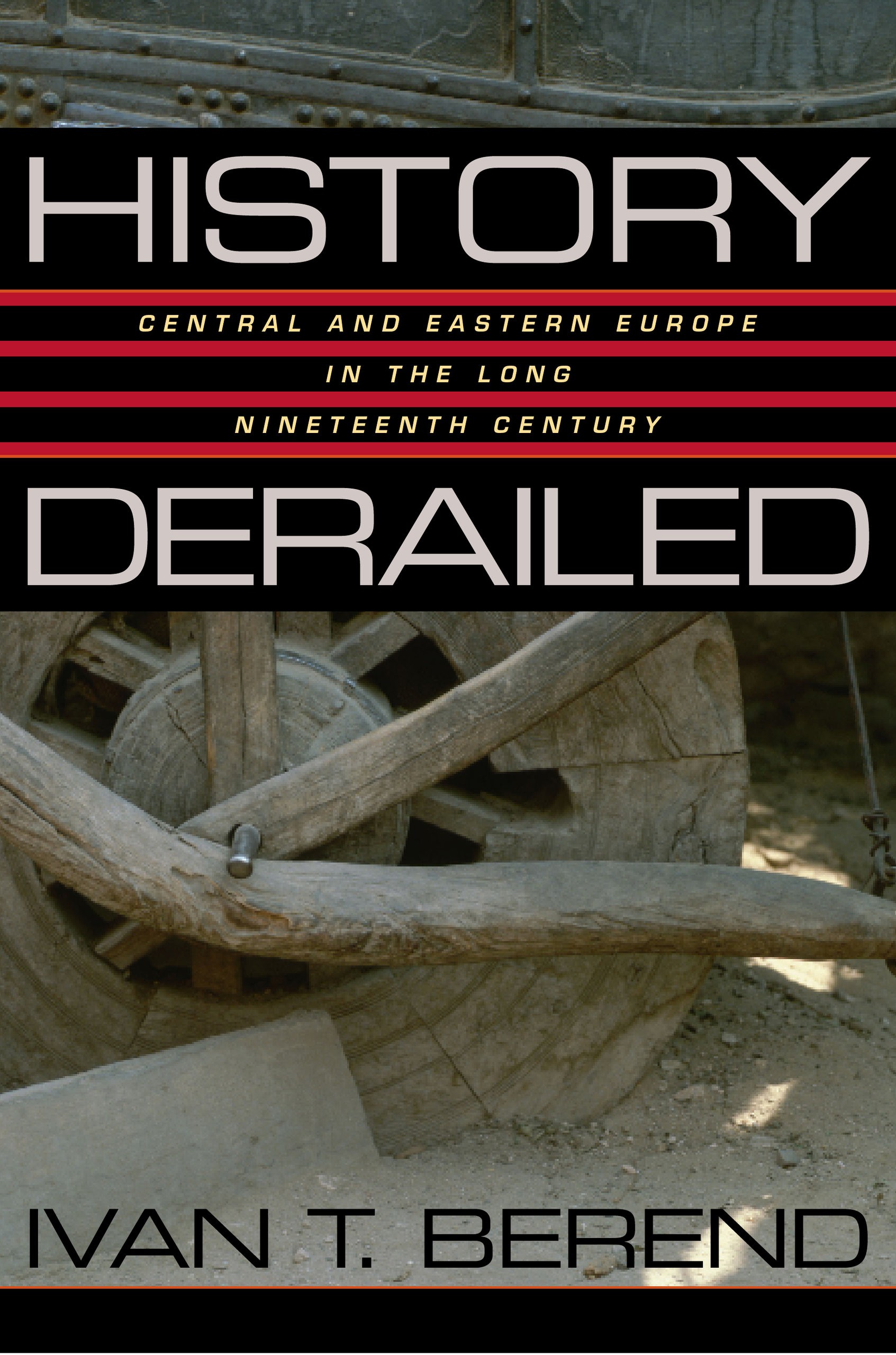
History Derailed

Central and Eastern Europe in the Long Nineteenth Century

by Ivan T. Berend (Author)
Price: $31.95 / £27.00
Publication Date: Jan 2005
Edition: 1st Edition
Title Details:
Rights: World
Pages: 404
ISBN: 9780520245259
Trim Size: 6 x 9
Illustrations: 97 b/w photographs, 2 maps, 3 tables

About the Book

There is probably no greater authority on the modern history of central and eastern Europe than Ivan Berend, whose previous work, Decades of Crisis, was hailed by critics as "masterful" and "the broadest synthesis of the modern social, economic, and cultural history of the region that we possess." Now, having brought together and illuminated this region's storm-tossed history in the twentieth century, Berend turns his attention to the equally turbulent period that preceded it. The "long" nineteenth century, extending up to World War I, contained the seeds of developments and crises that continue to haunt the region today.

The book begins with an overview of the main historical trends in the sixteenth to the eighteenth centuries, during which time the region lost momentum and became the periphery, no longer in step with the rising West. It concludes with an account of the persisting authoritarian political structures and the failed modernization that paved the way for social and political revolts. The origins of twentieth-century extremism and its tragedies are plainly visible in this penetrating account.

About the Author

Ivan T. Berend is Professor of History at the University of California, Los Angeles. Author of Decades of Crisis: Central and Eastern Europe before World War II (California, 1998) and of Central and Eastern Europe 1944-1993 (1996), he has now, with his informal "trilogy," performed the remarkable feat of laying the entire modern history of the region before the English-speaking audience.

Table of Contents

List of Illustrations
Preface
Acknowledgments

Introduction: The Emerging West as Ideal and Model for the East
1. The Challenge of the Rising West and the Lack of Response in the ""Sleeping"" East
2. Romanticism and Nationalism in Central and Eastern Europe
3. Uprisings and Reforms: The Struggle for Independence and Modernization
4. Economic Modernization in the Half Century before World War I
5. Social Changes: ""Dual"" and ""Incomplete"" Societies
6. The Political System: Democratization versus Authoritarian Nationalism
Epilogue: World War I

Bibliography
Index

Reviews

"A towering work of scholarship wrapped in a fascinating story."
Time Out For Entertainment
“Always interesting . . . a provocative overview of a complex region that is still undergoing change . . . Highly recommended.”
Choice: Current Reviews For Academic Libraries
“For Berend, history is a whole, and when cultural, economic, social, and political trends are taken together, they distinguish central and east Europeans from the rest of Europe.... Berend, a first-rate economic historian, treats the often neglected economic dimension with special skill.”
Foreign Affairs
“This is an economical and elegant narrative by a distinguished comparative historian of places and times that deserve to be better known.”
The Key Reporter
"I do not think it possible to understand the troubles and instabilities of Central and Eastern Europe today without reading Ivan T.Berend, the finest comparative historian of this region. In History Derailed, he has produced a characteristically lucid and masterly synthesis of its economic, social, political and cultural history in the 'long nineteenth century' which every reader of his much admired study of inter-war Central and Eastern Europe, Decades of Crisis, will need to read, and anyone interested in the continuing problems of the region will want to read."—Eric J. Hobsbawm, Emeritus Professor of Economic and Social History at the University of London and author of many histories including The Age of Extremes: A History of the World, 1914-1991

"This multi-faceted and lavishly illustrated analytical history of Central-East Europe before World War I, written by the world’s foremost scholar of the region, explains how and why the paths of modernization and development diverged so markedly between East and West Europe. Ivan T. Berend’s tour de force of historical interpretation must be essential reading for anyone seeking a true perspective on modern Europe."—Derek H. Aldcroft, University Fellow in the Department of Economic & Social Science, University of Leicester