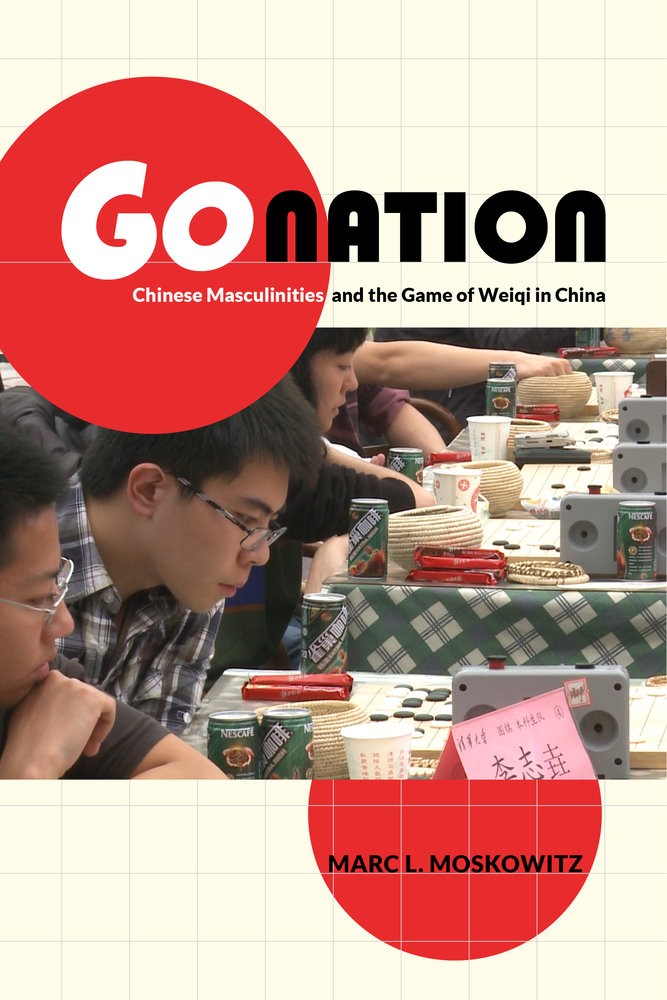
About the Book
Go (Weiqi in Chinese) is one of the most popular games in East Asia, with a steadily increasing fan base around the world. Like chess, Go is a logic game but it is much older, with written records mentioning the game that date back to the 4th century BC. As Chinese politics have changed over the last two millennia, so too has the imagery of the game. In Imperial times it was seen as a tool to seek religious enlightenment and was one of the four noble arts that were a requisite to becoming a cultured gentleman. During the Cultural Revolution it was a stigmatized emblem of the lasting effects of feudalism. Today, it marks the reemergence of cultured gentlemen as an idealized model of manhood. Marc L. Moskowitz explores the fascinating history of the game, as well as providing a vivid snapshot of Chinese Go players today. Go Nation uses this game to come to a better understanding of Chinese masculinity, nationalism, and class, as the PRC reconfigures its history and traditions to meet the future.
Table of Contents
Preface
Fieldwork
Notes on Terminology
Acknowledgements
Chapter 1. Introduction
The Game of Weiqi
New Technologies
The Ranking System
Gender Coding and the Naturalization of Difference
Weiqi Women
Ambiguous Identities and Taiwan’s Women’s Team
Constructing Masculinities and the Weiqi Sphere
Chapter 2. Multiple Metaphors and Mystical Imaginaries: A Cultural History of Weiqi
The Rules
Weiqi in Comparison with Chess
Religious Mysticism and Historical Teleologies
From Stigma to Status
Weiqi’s War Imagery
Chapter 3. Nation, Race, and Man
The Scholar and the Warrior
Chinese Masculinities: Individual Formation and Nationalist Discourses
Anti-Japanese Sentiments as Nation Building
Japan’s Weiqi Legacy
Mastering East Asia: National Rivalries and International Competitions
Conceptualizing Nations, Rethinking Play
An Unexpected Nostalgia for the Japanese Era
Chapter 4. Becoming Men: Children’s Training in Contemporary China
Weiqi Teachers and the Confucian Ideal
Modernizing Influences—Weiqi Schools as Corporate Structures
The Students
Weiqi as a Disciplinary Mechanism
Weiqi as Sport—Beyond the Cartesian Divide
Disciplining Parents
Chapter 5. A Certain Man: University Students, Amateurs, and Professionals
Class Consciousness and Relentless Competition
Suzhi
Weiqi’s Suzhi Discourse
The Peking University Weiqi Team, Ranks, and the Amateur/Professional Divide
Professional Training
Facing the Future
Chapter 6. Retirement and Constructions of Masculinity Among Working Class Weiqi Players
First Contact
Retirement
Park Culture
Kibitzing as a Social Ideal
Lived Histories
Masculinity Among the Working Class at the Park
Chapter 7. Conclusion: Looking Forward to a Bygone Age
Glossary of Terms
Citations
Index