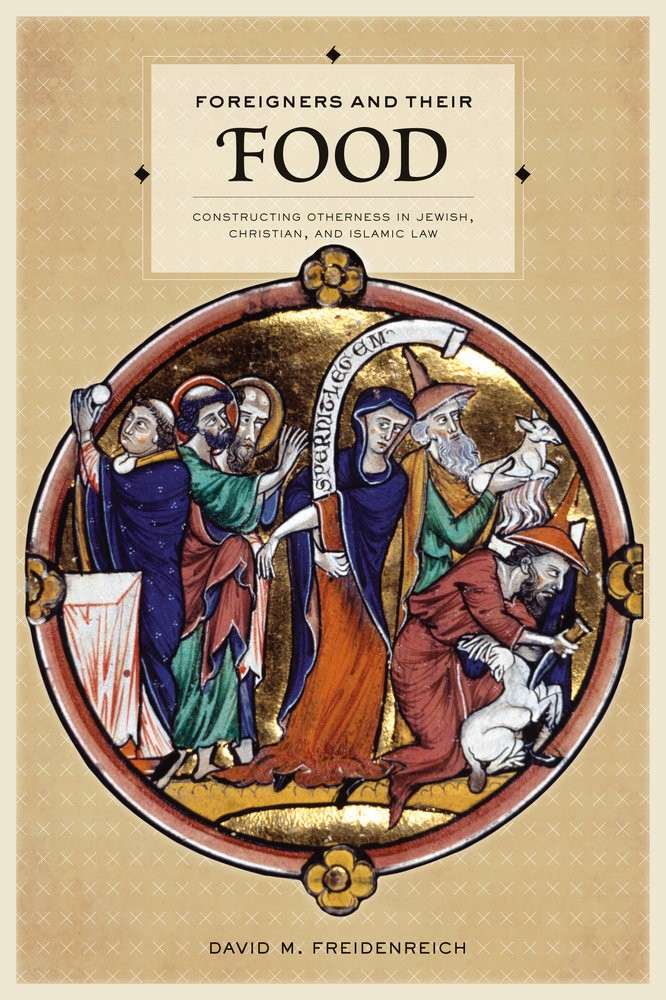
About the Book
Foreigners and Their Food explores how Jews, Christians, and Muslims conceptualize “us” and “them” through rules about the preparation of food by adherents of other religions and the act of eating with such outsiders. David M. Freidenreich analyzes the significance of food to religious formation, elucidating the ways ancient and medieval scholars use food restrictions to think about the “other.” Freidenreich illuminates the subtly different ways Jews, Christians, and Muslims perceive themselves, and he demonstrates how these distinctive self-conceptions shape ideas about religious foreigners and communal boundaries. This work, the first to analyze change over time across the legal literatures of Judaism, Christianity, and Islam, makes pathbreaking contributions to the history of interreligious intolerance and to the comparative study of religion.
Table of Contents
List of Illustrations
Preface
Notes on Style and Abbreviations
Part I. Introduction: Imagining Otherness
1. Good Fences Make Good Neighbors
2. "A People Made Holy to the LORD": Meals, Meat, and the Nature of Israel's Holiness in the Hebrew Bible
Part II. Jewish Sources on Foreign Food Restrictions: Marking Otherness
3. "They Kept Themselves Apart in the Matter of Food": The Nature and Significance of Hellenistic Jewish Food Practices
4. "These Gentile Items Are Prohibited": The Foodstuffs of Foreigners in Early Rabbinic Literature
5. "How Nice Is This Bread!": Intersections of Talmudic Scholasticism and Foreign Food Restrictions
Part III. Christian Sources on Foreign Food Restrictions: Defining Otherness
6. "No Distinction between Jew and Greek": The Roles of Food in Defining the Christ-believing Community
7. "Be on Your Guard against Food Offered to Idols": Eidolothuton and Early Christian Identity
8. "How Could Their Food Not Be Impure?": Jewish Food and the Definition of Christianity
Part IV. Islamic Sources on Foreign Food Restrictions: Relativizing Otherness
9. "Eat the Permitted and Good Foods God Has Given You": Relativizing Communities in the Qur?an
10. "'Their Food' Means Their Meat": Sunni Discourse on Non-Muslim Acts of Animal Slaughter
11. "Only Monotheists May Be Entrusted with Slaughter": The Targets of Shi?i Foreign Food Restrictions
Part V. Comparative Case Studies: Engaging Otherness
12. "Jewish Food": The Implications of Medieval Islamic and Christian Debates about the Definition of Judaism
13. Christians "Adhere to God's Book," but Muslims "Judaize": Islamic and Christian Classifications of One Another
14. "Idolaters Who Do Not Engage in Idolatry": Rabbinic Discourse about Muslims, Christians, and Wine
Notes
Works Cited
Index