University of California Press

About the Book

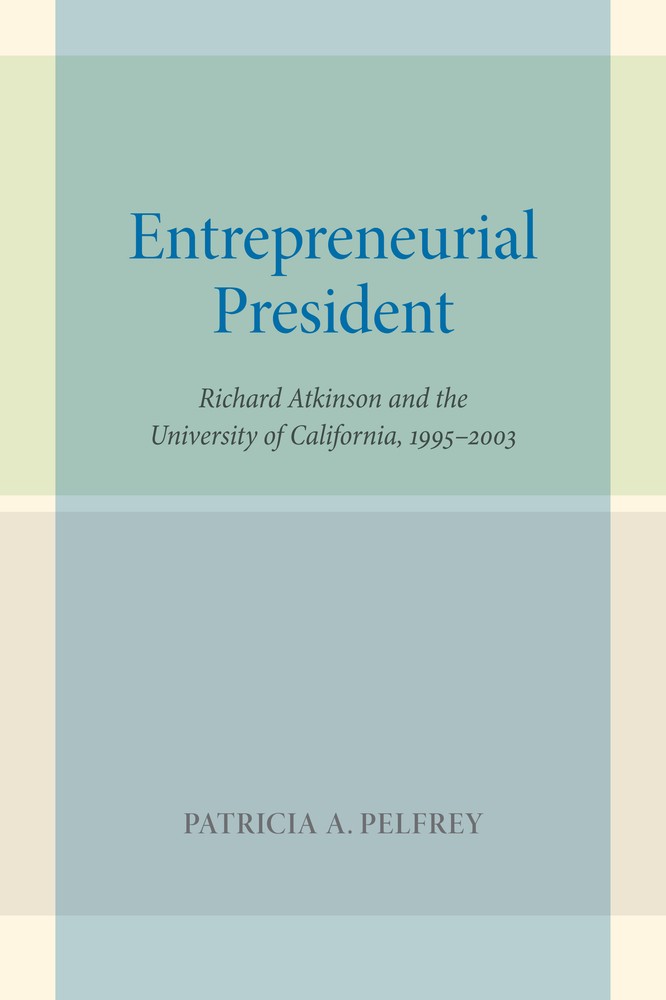
Richard C. Atkinson was named president of the University of California in August 1995, barely four weeks after the UC Regents voted to end affirmative action. How he dealt with the admissions wars—the political, legal, and academic consequences of that historic and controversial decision, as well as the issue of governance—is discussed in this book. Another focus is the entrepreneurial university—the expansion of the University’s research enterprise into new forms of scientific research with industry during Atkinson’s presidency. The final crisis of his administration was the prolonged controversy over the University’s management of the Los Alamos and Livermore nuclear weapons research laboratories that began with the arrest of Los Alamos scientist Wen Ho Lee on charges of espionage in 1999. Entrepreneurial President explains what was at stake during each of these episodes, how Atkinson addressed the issues, and why the outcomes matter to the University and to the people of California. Pelfrey’s book provides an analysis of the challenges, perils, and limits of presidential leadership in the nation’s leading public university, while bringing a historical perspective to bear on the current serious threats to its future as a university.

About the Author

Patricia Pelfrey is a Research Associate at the Center for Studies in Higher Education at UC Berkeley. She is the author of A Brief History of the University of California (UC Press, 2004).

Table of Contents

Foreword by Karl S. Pister
About This Book

1. The Evolution of a Crisis
2. The Education of a Chancellor
3. Who Runs the University?
4. Seventeenth President
5. A Problem in Search of a Solution
6. “A More Inclusive Definition of Merit”
7. Reinventing the Economy
8. An Idea and Its Consequences
9. History’s Coils: The Nuclear Weapons Laboratories
10. Presidents and Chancellors
11. Epilogue: One University

Appendix 1. Regents’ Resolutions SP-1, SP-2, and RE-28
Appendix 2. Atkinson Presidency Timeline
Appendix 3. University of California Trends, 1995–2003
Notes
Select Bibliography
Index

Reviews

“In this very readable, thoughtful, and richly informative account, Pelfrey uses an insider’s perspective gained by working in the Office of the President over three decades to show how Atkinson not only helped the University survive the first wave of the state’s ongoing budget crisis, but brought about or sustained several important changes of direction for the system and for higher education generally.”
Chronicles: Newsletter Of The Ucsd Emeriti Association
“A most interesting book. . . . The reader knows after just a few chapters that [Pelfrey] recognizes the most intriguing aspects of Atkinson’s personality. . . . It is hard to imagine anyone more qualified than Pat Pelfrey to write this book. . . . [Her] expertise is apparent throughout. . . . [The] book [begins] with what is easily the clearest and most inclusive discussion of the passage of SP-1 and SP-2 so far published. . . . There is no better description to be found of these tumultuous years; Pelfrey’s book is worth the price of purchase for these chapters alone.”
De Gruyter
“Pelfrey writes from an unparalleled inside position. . . . Full of insight.”
Journal Of The Society For College And University Planning
“Enlightening. . . . This book provides a wealth of important observations about the most salient aspects of the Atkinson presidency.”
Rev Higher Ed
"Her riveting chapter on the history of intelligence testing, disputes over the reliability of aptitude versus achievement testing and America's obsession with standardized tests should be mandatory reading for anyone interested in the history of the interplay between merit and democracy."
History of Universities 27, no. 1
"This engaging book is blessed with a special chemistry. It is, first, a

revealing story of one of the most intelligent, adaptive, and creative

leaders in the history of the University of California. It is, second, a

superb account of the knottiest problems—affirmative action, relations

with the national laboratories, for example—faced by the University during

the Atkinson presidency. It is, third, remarkably enriched by Patricia Pelfrey's talents, long experience, keen judgment, and objectivity as the storyteller."--Neil J. Smelser, Professor of Sociology, Emeritus, University of California, Berkeley and author of Reflections on the University of California

“This book has a wide range of appeal, from University of California loyalists to scholars of public higher education, its governance, administration and politics.”--Karl S. Pister, Chancellor Emeritus, UC Santa Cruz and Dean and Roy W. Carlson Professor of Engineering Emeritus, UC Berkeley