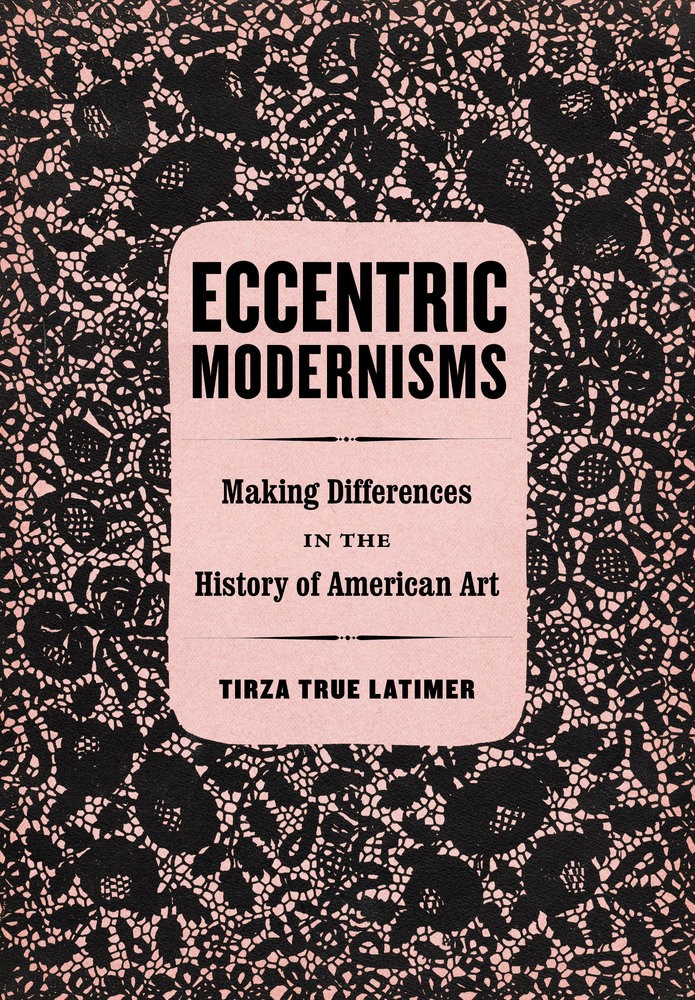
“Eccentric Modernisms is an inspiring act of queer archive building. In this elegant interdisciplinary study, Tirza True Latimer brings to light three unheralded modernist “documents” collaboratively produced by queer artists who, in Latimer’s view, advance “manifestos” of “eccentric modernism”.”
"Works like Latimer’s will undoubtedly become important records of the changing vocabulary of modernism, in which the structures that guided modernism’s conception in the United States (MoMA, Greenberg’s criticism, the ideal of abstraction, the words “original,” “style,” “kitsch,” and “pure”) are proven unstable. . . . Indeed, scholars of queer history and of artistic movements will find a wealth of primary sources to use in beginning or continuing deeper research into marginalized perspectives on American artistic movements.”
“Tirza True Latimer’s analysis of under-studied episodes in the queer history of modernism challenges so many common art historical assumptions that this book could be said to queer art history itself. Eccentric Modernisms makes a compelling case for the importance of queer subcultures and multimedia collaborations.”—Christopher Reed, Professor of English and Visual Culture, The Pennsylvania State University
“Latimer gives us both intimate and expansive readings of three ambitious interdisciplinary projects of the 1930s and 1940s, emphasizing their collaborative nature as one way artists such as Virgil Thomson, Pavel Tchelitchew, Christian Bérard, and Charles Henri Ford performed their modernism. Her study promotes a more inclusive history of modern art, one that embraces the productive partnerships within the cosmopolitan and international queer community during the first half of the twentieth century.” —Wanda M. Corn, Robert and Ruth Halperin Professor Emerita in Art History, Stanford University
“This book reveals how a creative community was formed and sustained, and how it eventually, although belatedly, came to influence our culture. Combining historical, contextual, theoretical, and visual analyses of under-studied artworks, publications, and ephemera, Latimer tells a hidden history that does not rely on authoritarian truth claims, offering instead a methodological model for understanding suppressed, yet highly significant, historical phenomena. Interdisciplinary in nature, this study is bound to be significant across a multitude of fields.”—Dr. Nizan Shaked, author of The Synthetic Proposition: Conceptualism and the Political Referent in Contemporary Art