About the Book
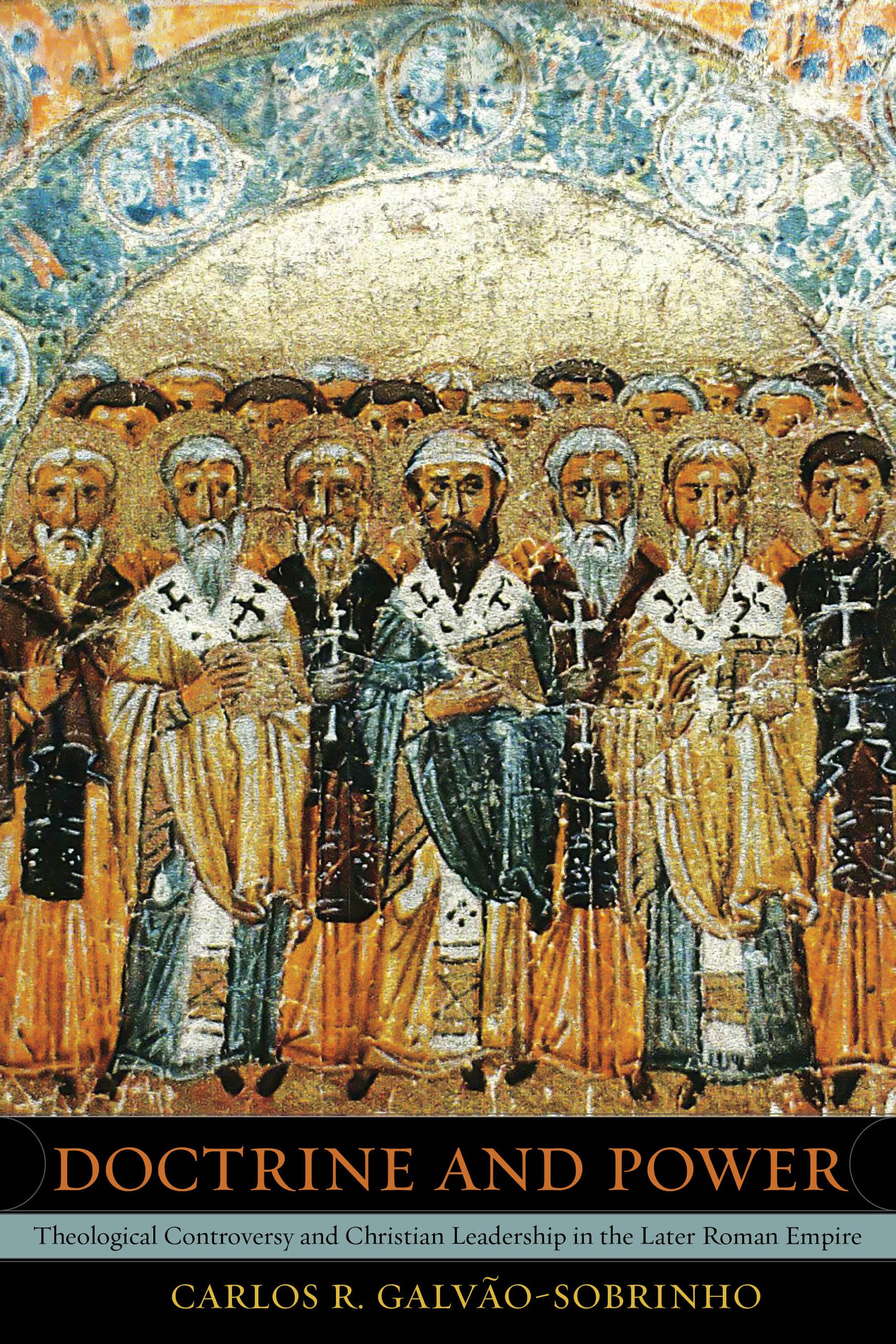
During the fourth century A.D., theological controversy divided Christian communities throughout the Eastern half of the Roman Empire. At stake was not only the truth about God but also the authority of church leaders, whose legitimacy depended on their claims to represent that truth. In this book, Carlos R. Galvao-Sobrinho argues that out of these disputes was born a new style of church leadership, one in which the power of the episcopal office was greatly increased. He shows how these disputes compelled church leaders repeatedly to assert their orthodoxy and legitimacy—tasks that required them to mobilize their congregations and engage in action that continuously projected their power in the public arena. These developments were largely the work of prelates of the first half of the fourth century, but the style of command they inaugurated became the basis for a dynamic model of ecclesiastical leadership found throughout late antiquity.
Table of Contents
Acknowledgments
Introduction
Part I. Points of Departure: Theology and Christian Leadership in the Third-Century Church
1. Christian Leadership and the Challenge of Theology
2. “Not in the Spirit of Controversy”: Truth, Leadership, and Solidarity
Part II. God in Dispute: Devotion and Truth, A.D. 318–325
3. Precision, Devotion, and Controversy in Alexandria
4. Making the People a Partner to the Dispute
5. “For the Sake of the Logos”: Spreading the Controversy
6. “To Please the Overseer of All”: The Emperor’s Involvement and the Politicization of Theology
Part III. Defining God: Truth and Power, A.D. 325–361
7. Claiming Truth, Projecting Power, A.D. 325–337
8. The Challenge of Theology and Power in Action: Bishops, Cities, and Empire, A.D. 337–361
Conclusion
Appendix
Bishops Investigated or Deposed for Doctrinal Reasons before the Arian Controversy
Compromise and Solidarity in Doctrinal Controversy in the Early Church
The Workshops of Alexandria
Kolluthus’s Schism and the Arians
The Recall of Arius and the Bithynian Bishops
The Arian Community of Alexandria after Nicaea
Athanasius and Arsenius of Hypsele
Events Involving Athanasius from Spring 330 to Winter 332
From Athanasius’s Flight to the Councils of Rome and Antioch, 339–341
List of Abbreviations
Notes
Bibliography
Index