University of California Press

About the Book

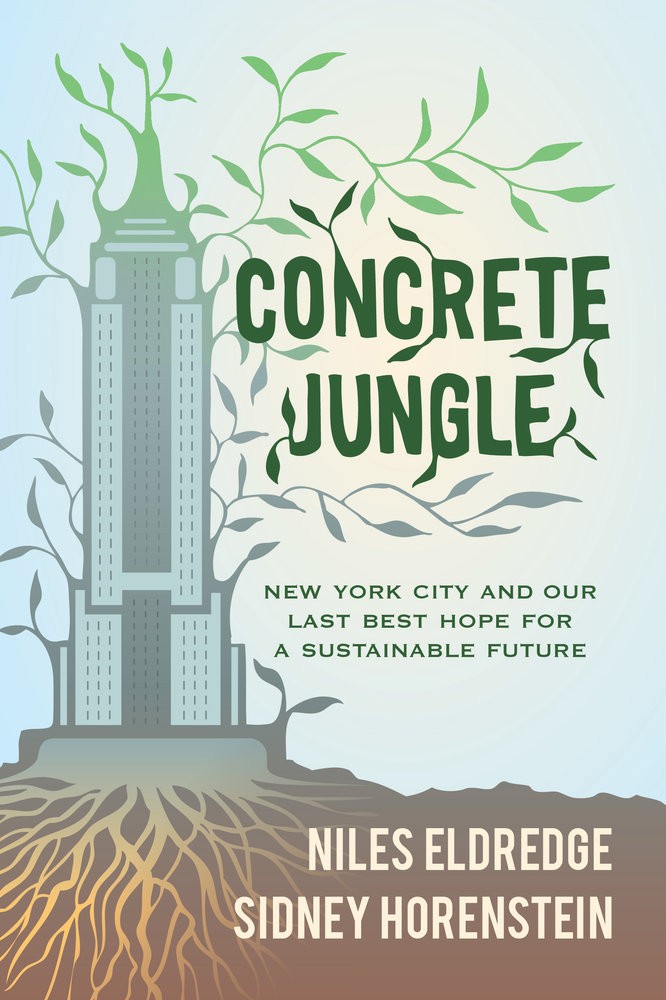
If they are to survive, cities need healthy chunks of the world’s ecosystems to persist; yet cities, like parasites, grow and prosper by local destruction of these very ecosystems. In this absorbing and wide-ranging book, Eldredge and Horenstein use New York City as a microcosm to explore both the positive and the negative sides of the relationship between cities, the environment, and the future of global biodiversity. They illuminate the mass of contradictions that cities present in embodying the best and the worst of human existence. The authors demonstrate that, though cities have voracious appetites for resources such as food and water, they also represent the last hope for conserving healthy remnants of the world’s ecosystems and species. With their concentration of human beings, cities bring together centers of learning, research, government, finance, and media—institutions that increasingly play active roles in solving environmental problems.

Some of the topics covered in Concrete Jungle:

--The geological history of the New York region, including remnant glacial features visible today

--The early days of urbanization on Manhattan Island, focusing on the history of Central Park, Collect Pond, and Manhattan Square

--The history of early railway lines and the development of New York’s iconic subway system

--The problem of producing enough safe drinking water for an ever-expanding population

--Prominent civic institutions, including universities, museums, and zoos

About the Author

Niles Eldredge is Curator Emeritus at the American Museum of Natural History and codeveloper with Stephen Jay Gould of the theory of punctuated equilibria in evolutionary biology. Among his many books are Life in the Balance and Dominion (UC Press).

Sidney Horenstein is a geologist and Environmental Educator Emeritus with the American Museum of Natural History and the natural history consultant to the Bronx County Historical Society. He has written extensively about New York City geology.

Table of Contents

Preface: The Yin and Yang of Cities 

1. Regarding Broadway: The Urban Saga and the New York Microcosm 

2. Forest Primeval 
Building Stones 

3. Landscape Transformed 
Around the American Museum of Natural History 
East River Shoreline 

4. Growth of the Concrete Jungle 
One Hundred and Fifty-Fifth Street 
Queensboro Bridge and East River 

5. Fouling, and Cleaning, the Nest 
The High Bridge 

6. Invasion and Survival 
John Torrey 
Fort Tryon Park 
The Battery 
The Sea Wall 

7. Resilience, Restoration, and Redemption 
Canyonlands and the Future 

8. Cities, Globalization, and the Future of Biodiversity 

Notes, References, and Suggestions for Further Reading 
List of Illustrations 
Acknowledgments 
Index

Reviews

"Both born and bred New Yorkers, the authors masterfully make their case by telling it through the history of their city’s growth and development, starting with the area’s underlying geology and tracing New York’s settlement and eventual development into perhaps the archetypal modern metropolis. The book persuasively makes the case that the world’s concrete jungles may in fact be one of our best tools for saving the actual jungles and the rest of the planet’s biodiversity."
Civil Engineering
"Concrete Jungle delivers a “think globally, act locally” message for New York City."
CHOICE
"A fascinating read, and New Yorkers will find much to interest them in discovering often overlooked historical features."
The Biologist
"Concrete Jungle is a brilliant exploration of New York City's environmental treasures and why it is so important to preserve them. The book's clarity and lucid prose will appeal to academics and general readers alike, to lovers of cities as well as environmentalists." ~William Helmreich, author of The New York Nobody Knows: Walking 6,000 Miles in the City

"Building sustainable cities is a novel idea to many people, including conservationists, but it is arguably the best option our species has for resolving most of our global environmental problems. Concrete Jungle makes this case in a stimulating and accessible way."
~ Michael McKinney, University of Tennessee and Editorial Board, Urban Naturalist