University of California Press

About the Book

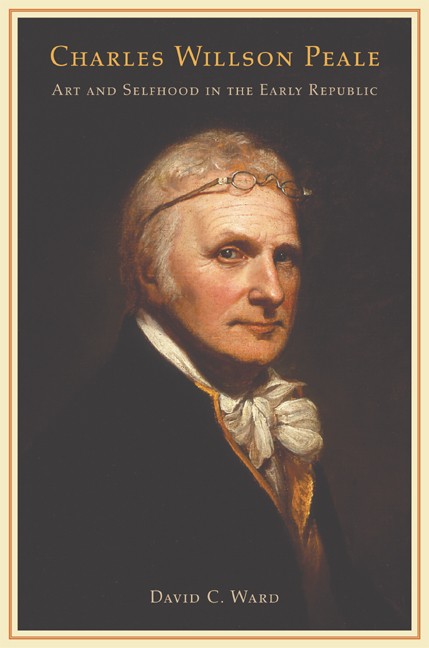
Son of a convicted felon whose early death left the family impoverished, Charles Willson Peale (1741–1827) went on to lead a staggeringly full and successful life. A portrait painter who produced an unparalleled body of work, including the iconic The Artist in His Museum, Peale was also a revolutionary soldier, a radical activist, an impresario of moving pictures, a natural historian, an inventor, and the proprietor of one of the first modern museums. His many other interests included a lifelong preoccupation with writing; in fact, his autobiography is one of the first examples of the genre in the United States. David C. Ward's engaging book, richly textured with references to the history and culture of the time, is the first full critical biography of Peale. It links the artist's autobiography to his painting, illuminating the man, his art, and his times. Peale emerges for the first time as that particularly American phenomenon: the self-made man.

Before Peale's time, autobiographies had been written mainly as religious and confessional documents. Peale, however, produced his secular work to describe, not how God made him, but how he worked to make himself. This compelling study, drawing extensively from Peale's extraordinary autobiography, shows how Peale's life itself documents the development of American independence and individualism. Ultimately Ward addresses Hector St. John de Crèvecoeur's great question, "What then is the American, this new man?" as he sheds light on one of these new men and on the formative years in which he lived.

About the Author

David C. Ward is historian and deputy editor of the Peale Family Papers at the National Portrait Gallery of the Smithsonian Institution.

Table of Contents

List of Illustrations
Acknowledgments
Preface. Charles Willson Peale: This New Man

Part I ""Why Not Act the Man?""
1. Forgeries: Charles Willson Peale and His Father
2. ""This Faint Spark of Genius"": Fortune, Patronage, and Peale's Rise as an Artist
3. ""Application Will Overcome the Greatest Difficulties"": Work, Career, and Identity in Peale's Art and Life

Part II ""I Scrutinize the Actions of Men""
4. A Good War and a Troubled Peace: Charles Willson Peale's Search for Order, 1776-94
5. ""The Medicinal Office of the Mind"": The Peale Museum's Mission of Reform, 1793-1810 6. ""The Hygiene of the Self"": Work, Writing, and the Enlightened Body

Part III ""It Would Seem a Second Creation""
7. The Struggle against Dispersal: Work, Family, and Order in Peale's Family Portraits
8. ""I Bring Forth into Public View"": Peale's SecularApotheosis in The Artist in His Museum

Notes
Index

Reviews

“Ward zooms in on one of [American art’s] founding figures, and shows by a variety of critical and analytic means how this protean individual’s efforts to establish himself as an artist, art entrepreneur, and art patriarch meshed with the transition of his native land from resentful dependency on foreign rule to hard-won if precarious independence. Ward brings his subject to life with a satisfying array of well-selected primary texts, augmented by extensive reference to current scholarly research on the artist, as well as the broader social theory of writers.”
Bookforum
“Ward’s beautifully written, lavishly illustrated, and always engaging biographical interpretation of Peale’s process of self-creation has much to offer both newcomers and veterans to Peale.”
Archives Of American Art Journal
"At last, Charles Willson Peale is revealed, compleat and complex: as the familiar and essential artist and scientist, to be sure, but also as the patriot, parent, publicist, and more. David Ward's astute examination of this unique polymath introduces unexpected aspects of the man and, in so doing, sheds new light on the genius of the American Enlightenment. A masterly portrait, and an interpretive tour de force."—Charles C. Eldredge, author of Tales from the Easel: American Narrative Paintings

"This is an invaluable critical study of Charles Willson Peale—clear, erudite, and imaginative. Ward shows what went wrong as well as right in Peale's lifelong attempts at self-fashioning, giving us a richer picture than ever before of this restless American figure."—Alexander Nemerov, author of The Body of Raphaelle Peale: Still Life and Selfhood, 1812-1824

"One of the hallmarks of public life after the Revolution was the desire of notable Americans to fashion their own enduring reputations. This exquisite book lucidly and compellingly investigates how Charles Willson Peale expressed and controlled his image—in his ostensibly private autobiographical writing as well as in public forums such as self-portraiture and the production of spectacles and events. David C. Ward reassembles the visual and verbal conversations Peale conducted with and within himself over the course of five decades, and in doing so takes us on a remarkable journey through the labyrinth of a major artist's evolving self-consciousness during the early Republic."—Paul Staiti, Professor of Fine Arts on the Alumnae Foundation, Mount Holyoke College