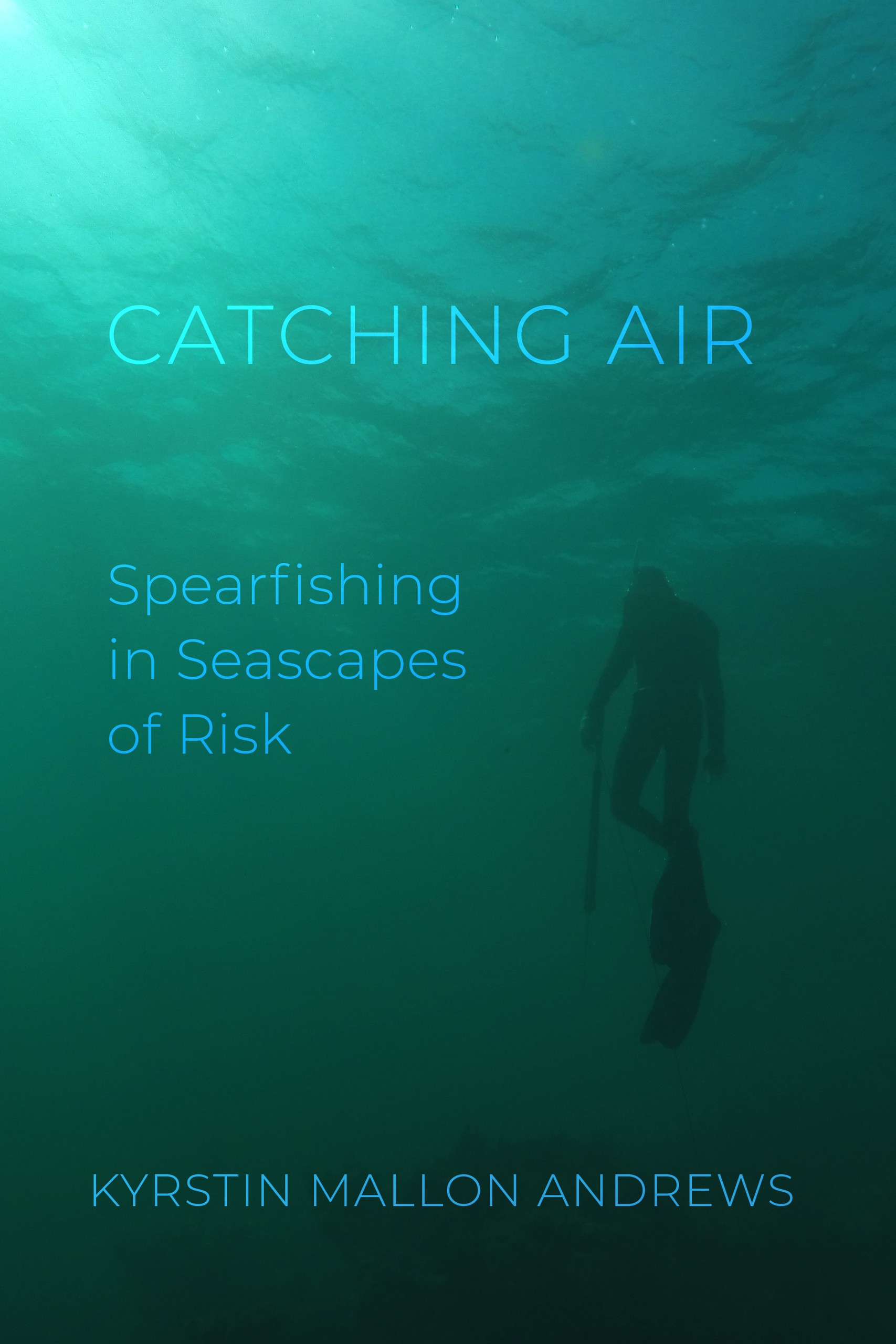
“Written with a rare balance of urgency and sensitivity, Catching Air is a gripping portrait of a Dominican fishing community caught in the crosscurrents of environmental policy and economic precarity. Marshaling more than a decade of ethnographic research carried out both on land and underwater, Kyrstin Mallon Andrews charts an exciting new course in critical studies of conservation, showing convincingly how the planetary crisis is experienced as a crisis of the laboring body.”—Alex Nading, author of The Kidney and the Cane: Planetary Health and Plantation Labor in Nicaragua
“A compelling account of marginalized fishers who find themselves on the wrong side of legal regimes and environmental changes. Exploring the nature and experience of risk, relationships between communities and marine ecologies, and the embodied experience of climate change, this rich ethnography will be of interest to scholars of the environment, labor, health, and the Americas.”—C. Anne Claus, author of Drawing the Sea Near: Satoumi and Coral Reef Conservation in Okinawa
“Drawing on years of immersive fieldwork, this book offers a rich and deeply human account of the lives of Afro-Caribbean fishers and their families in Monte Cristi, bringing attention to a community rarely represented in studies of the Dominican Republic. Moving beyond tourism-centered narratives, it traces how environmental change, economic uncertainty, and social marginalization shape everyday life along the coast. With remarkable ethnographic care, Mallon Andrews shows how climate change and conservation policies are lived and negotiated through bodies, livelihoods, and relationships to the sea. Challenging portrayals of fishers as irresponsible environmental actors, the book foregrounds their knowledge, struggles, and efforts to adapt to changing ecological and political realities. In doing so, it reveals how climate change leaves its mark not only on marine environments but also on the bodies of the fishers themselves.”—Laura Otto, University of Würzburg