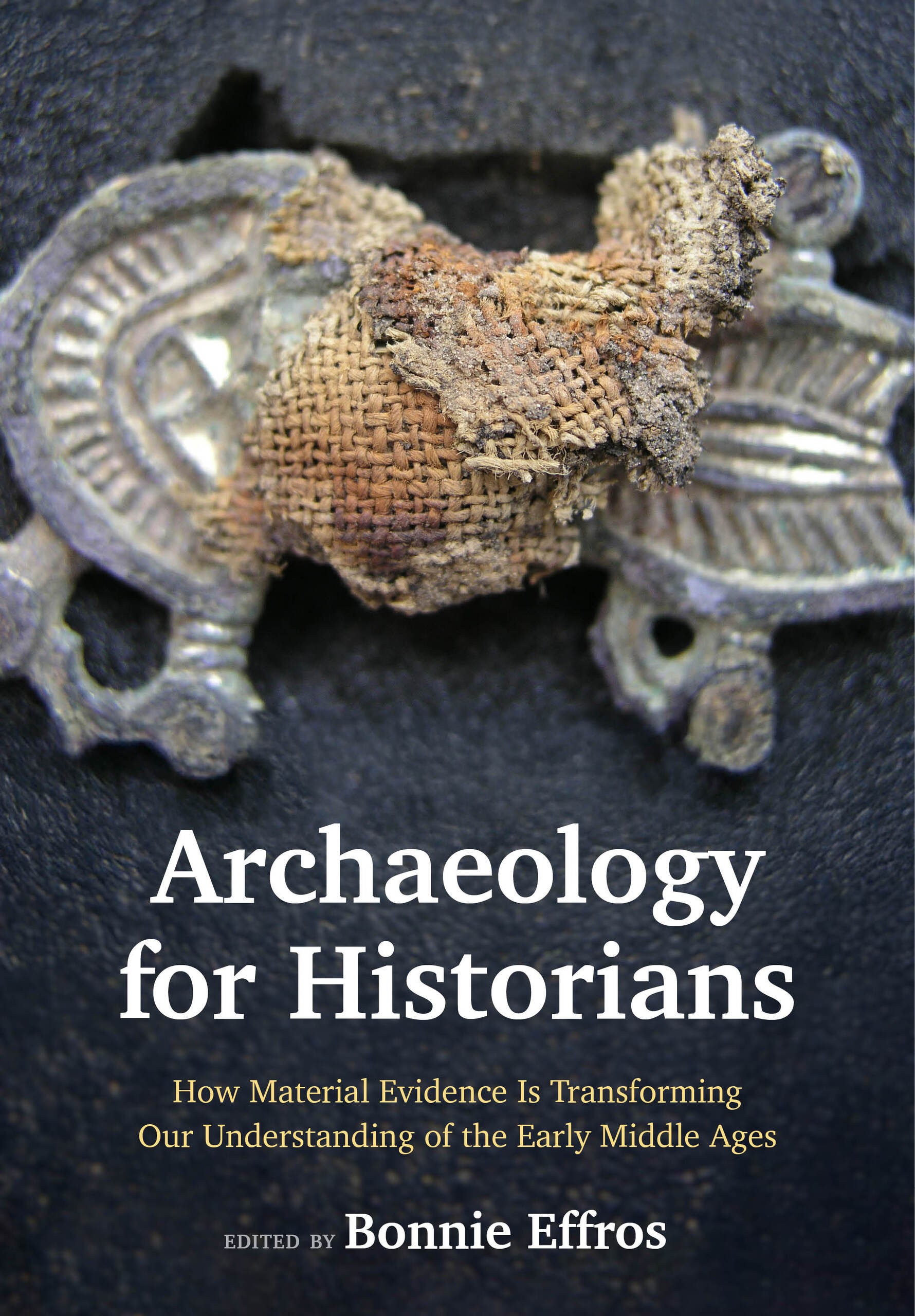
University of California Press

Archaeology for Historians

How Material Evidence Is Transforming Our Understanding of the Early Middle Ages

by Bonnie Effros (Editor)
Price: $49.95 / £42.00
Publication Date: Jun 2027
Edition: 1st Edition
Title Details:
Rights: World
Pages: 441
ISBN: 9780520304536
Trim Size: 7 x 10
Illustrations: 47 b/w illustrations, 7 maps, 3 tables

About the Book

Despite the growing importance of interdisciplinarity, long-standing obstacles to dialogue between archaeology and the humanities persist. Archaeology is by far the most rapidly growing source of evidence for the late antique and early medieval past, and historians need a basic background in its methods and debates to facilitate critical engagement with a vast body of data that extends far beyond the documentary record. Given the many difficulties—and potential pitfalls—of launching oneself into the literature of another discipline, Archaeology for Historians provides a practical, hands-on entry to archaeology for students and scholars who want to engage with evidence in a more meaningful way. As an introduction to the field, this volume offers readers access to some of the central debates in late antique and early medieval archaeology, familiarizes them with the benefits and challenges of current interdisciplinary work, and enables them to interpret archaeological research with greater awareness of methodological issues and trends.

About the Author

Bonnie Effros is Professor of History at the University of British Columbia. Her recent publications include Incidental Archaeologists: French Officers and the Rediscovery of Roman North Africa and The Oxford Handbook of the Merovingian World.

Table of Contents

CONTENTS
 

Acknowledgments
 

Introduction

Bonnie Effros
 

Part I. The Archaeological Discipline, Material Remains, and Time

1. The Archaeological Voice: Differences Between History and Archaeology

Hendrik Dey and Paolo Squatriti

2. The Archaeological Dig: The Consequences of Creating Order from Disorder

Emma Brownlee

3. Objects and Material Remains: Interpreting Archaeological Evidence

Nancy L. Wicker

4. Relative and Absolute Chronologies: How Archaeologists Date Early Medieval Remains

Anton Ervynck

5. Paleoclimatology and the Early Middle Ages: Convergences and Divergences

Timothy P. Newfield, Markus Stoffel, Christophe Corona, Inga Labuhn, Dominik Fleitmann, and Stefani A. Crabtree
 

Part II. The Varied Landscapes of Archaeological Exploration

6. Reconstructing Early Medieval Landscapes, Environments, and Human-Environment Relations

Harriet J. Evans Tang and Karen Milek

7. How to Read a Late Antique Settlement

David Petts

8. Understanding the Importance of an Archaeological Survey

Carlo Citter

9. Late Antique and Early Medieval Cities: Architecture and Experience

Andrea Augenti

10. Archaeology of Production, Distribution, and Trade

Unn Pedersen

11. Late Antique and Early Medieval Diet and Food Webs

Pam Crabtree and Hannah Lau
 

Part III. Archaeology, Identity, and Human Remains

12. The Measurement of “Barbarian” Skulls: Nineteenth-Century Craniology and Debates About French Ancestry

Bonnie Effros

13. Cemeteries as Sources: Early Medieval Mortuary Archaeology from the Ground Up

Alison Klevnäs

14. Late Antique and Early Medieval Migrations

Susanne Hakenbeck

15. Approaching Ancient and Modern DNA: The Opportunities and Challenges

Jörg Feuchter

16. Archaeology of Disease and Disability

Rachel Schats
 

Glossary

Further Reading

Primary Resources for Late Antique and Early Medieval Archaeological Research

Contributors

Index