University of California Press

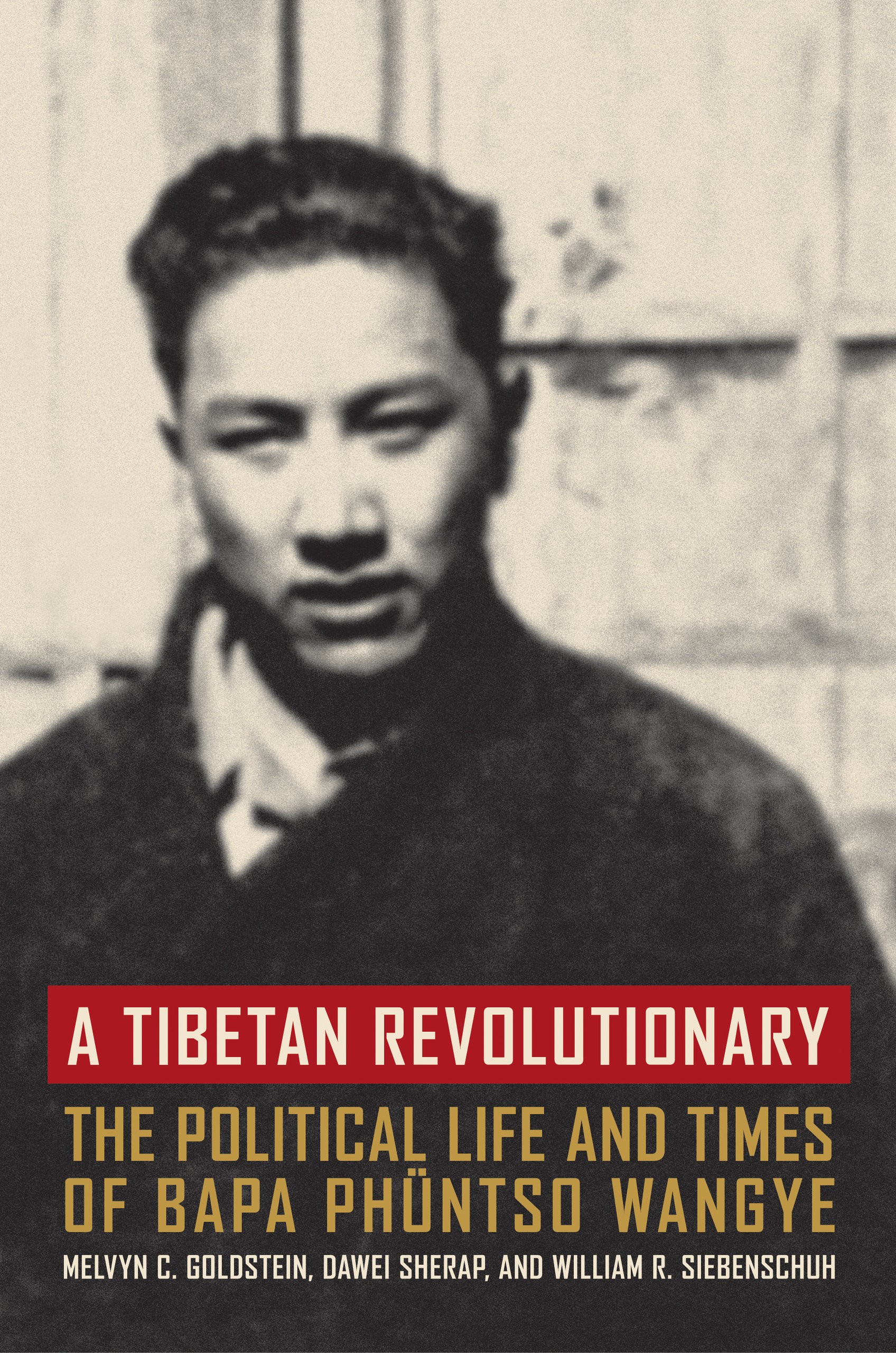
A Tibetan Revolutionary

The Political Life and Times of Bapa Phüntso Wangye

by Melvyn C. Goldstein (Author), Dawei Sherap (Author), William R Siebenschuh (Author)
Price: $27.95 / £24.00
Publication Date: Jun 2004
Edition: 1st Edition
Title Details:
Rights: World
Pages: 395
ISBN: 9780520940307

About the Book

This is the as-told-to political autobiography of Phüntso Wangye (Phünwang), one of the most important Tibetan revolutionary figures of the twentieth century. Phünwang began his activism in school, where he founded a secret Tibetan Communist Party. He was expelled in 1940, and for the next nine years he worked to organize a guerrilla uprising against the Chinese who controlled his homeland. In 1949, he merged his Tibetan Communist Party with Mao's Chinese Communist Party. He played an important role in the party's administrative organization in Lhasa and was the translator for the young Dalai Lama during his famous 1954-55 meetings with Mao Zedong. In the 1950s, Phünwang was the highest-ranking Tibetan official within the Communist Party in Tibet. Though he was fluent in Chinese, comfortable with Chinese culture, and devoted to socialism and the Communist Party, Phünwang's deep commitment to the welfare of Tibetans made him suspect to powerful Han colleagues. In 1958 he was secretly detained; three years later, he was imprisoned in solitary confinement in Beijing's equivalent of the Bastille for the next eighteen years.

Informed by vivid firsthand accounts of the relations between the Dalai Lama, the Nationalist Chinese government, and the People's Republic of China, this absorbing chronicle illuminates one of the world's most tragic and dangerous ethnic conflicts at the same time that it relates the fascinating details of a stormy life spent in the quest for a new Tibet.

About the Author

Melvyn C. Goldstein is John Reynolds Harkness Professor in Anthropology and Codirector of the Center for Research on Tibet at Case Western Reserve University. Dawei Sherap is a Tibetan-born intellectual living and working in China. He has written extensively on Phünwang. William R. Siebenschuh is Chair of the English Department at Case Western Reserve University.

Table of Contents

List of Illustrations
Preface
Acknowledgments
Note on Romanization and Abbreviations
List of Key Persons
Introduction. A Brief Historical Context

PART I. GROWING UP IN KHAM AND CHINA
1. Childhood in Batang
2. The Coup of Lobsang Thundrup
3. School Years

PART II. THE TIBETAN COMMUNIST PARTY ERA
4. Planning Revolution
5. Returning to Kham
6. To Lhasa
7. The Indian Communist Party
8. On the Verge of Revolt
9. Escape to Tibet
10. From Lhasa to Yunnan

PART III. THE PEOPLE’S REPUBLIC OF CHINA
11. The Return to Batang
12. The Seventeen-Point Agreement
13. To Lhasa Again
14. With the PLA in Lhasa
15. A Year of Problems
16. An Interlude in Beijing
17. Beginning Reforms

PART IV. INCARCERATION
18. Tension in Lhasa
19. Labeled a Local Nationalist
20. To Prison
21. Solitary Confinement
22. A Vow of Silence

PART V. AFTER PRISON
23. Release from Prison
24. A New Struggle
25. Nationalities Policy

Epilogue. A Comment by Phünwang
Appendix A. Original Charter of the Eastern Tibet People’s Autonomous Alliance
Appendix B. Summary of Talks with Tibetan Exile Delegations
Appendix C. Some Opinions on Amending the Constitution with Regard to Nationalities
Glossary of Correct Tibetan Spellings
Index

Reviews

"A surprising and necessary book on Phünwang for anyone seeking to understand Tibet."
New York Review Of Books
“. . . Well-written . . . this book is a great read, a remarkable read . . . [that] is righly recommended.”
Case
“Few books illuminate the lives of secular Tibetans, making this vibrant biography of a Tibetan revolutionary an invaluable addition to modern Tibetan history. . . . [Phünwang’s] awe-inspiring story fills many gaps in the history of the relationship between China and Tibet and introduces to a wider world an extraordinary human being.”
Booklist
“It is both an astonishing tale of idealism and courage and an appalling catalogue of bad faith and historical blunder…[an] important book.”
Financial Times
“Presents a significant, if neglected, aspect of Tibetan biographical history.”
Shambhala Sun/Buddhadharma
“Provides useful guidelines to law students and lawyers who want to master their craft.”
New York Law Journal
“Taken from many hours of interviews, the narrative flows well, and the translation is highly readable, with helpful explanatory footnotes.”
Library Journal
"These extraordinary memoirs dictated by a key figure in the history of 20th century Sino-Tibetan relations are essential reading for all interested in understanding this important subject. The founder of the Tibetan Communist Party recalls vividly his personal role in the epic struggle of the Tibetan people over tradition and modernity, and the hopes, betrayals and tragedies that have marked it. The idealism, honesty and courage that have defined his life are in full evidence in this gripping personal narrative."—John L. Holden, President, National Committee on U.S.-China Relations

"This is one of the great untold stories of modern Tibet. Phüntso Wangye is a man who has never stopped fighting for his people, and the story of his life is both heartbreaking and inspiring, and essential for understanding what has happened in Tibet since the 1930s. Tibetan history has never before been as exciting to read as it is here."—John Ackerly, President, International Campaign for Tibet