9 Results

"Feminist Media Histories" Celebrates Pride Month
Jun 22 2026
"Feminist Media Histories" has removed the paywall from a selection of articles for Pride Month.

Explore UC Press Film & Media Studies Journals at #SCMS26
Mar 25 2026
Enjoy limited-time free content from film and media studies journals during #SCMS26.
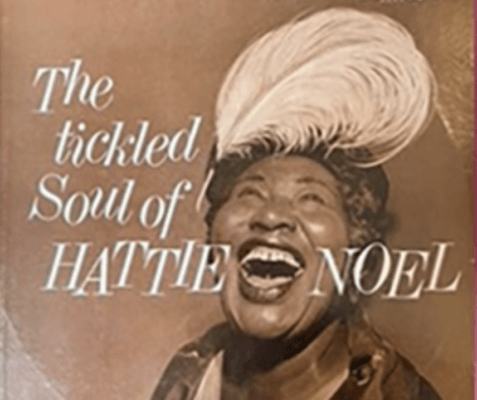
Uncovering Stand-Up Comedy’s Feminist Media History
Feb 22 2025
Hattie Noel was a trailblazer of the stand-up comedy form. While the visual archive shows her constrained in the controlling images of Disney’s hippo and Hollywood’s maid, her comedy albums tell a different story of Black representation.

Why We Curate Feminist Film Archives: A Q&A with Feminist Media Histories Guest Editors Maggie Hennefeld and Laura Horak
May 13 2024
“What do we, as feminists, need right now—from cinema, from archives, from our communities? How can filmmaking, film festivals, and social movements of the past inspire or befuddle us today? And what is at stake in selecting and presenting archival works by women to create new forms of community?”
A Look Back at 10 Years of Feminist Media Histories
Mar 14 2024
In celebration of Women's History Month, we've removed the paywall from the guest editors’ introductions from the past nine Spring issues of Feminist Media Histories (FMH). As we anticipate the journal's tenth anniversary issue (forthcoming in April 2024), we invite you to read this selection of con

Q&A with Diana W. Anselmo, author of A Queer Way of Feeling
Apr 11 2023
Part of our Feminist Media Histories series, A Queer Way of Feeling gathers an unexplored archive of fan-made scrapbooks, letters, diaries, and photographs to explore how girls coming of age in the United States in the 1910s used cinema to forge a foundational language of female nonconformity, intim

Kovács Essay Award Winner on the Activism of Indian Film Star Shanta Apte
Mar 19 2021
Poster of movie 'Kunku' (Marathi)/ 'Duniya Na Mane' (Hindi), 1937, by V. Shantaram.In 1939, at the height of her stardom, the actress Shanta Apte went on a spectacular hunger strike in protest against her employers at Prabhat Studios in Poona, India. The following year, Apte wrote a harsh polemi

Editor Spotlight: Meet Raina Polivka, Senior Editor of Music, Film, Media Studies
Mar 17 2021
In this edition of our UC Press Editor Spotlight Series, we sat down with our Music, Film, and Media Studies Editor Raina Polivka, to discuss what drew her to her disciplines, what types of projects she’s looking for, and her time working at the Kinsey Institute. Read on or watch the video below to
Film Festival Programming as Activism: A Q&A with Contributors to Feminist Media Histories’s Special Issue on “Media Activism”
Nov 07 2019
In the latest issue of Feminist Media Histories on the theme of “Activism,” Marisa Hicks-Alcaraz and Eve Oishi co-wrote the essay “Negotiating Political Identity in Community-Based Film Festivals: Perspectives from Curator/Scholar/Activists.” Oishi and Hicks-Alcaraz met as professor and graduate stu