Introducing a New Chapter of Current History: A Q&A with Lindsay Shingler
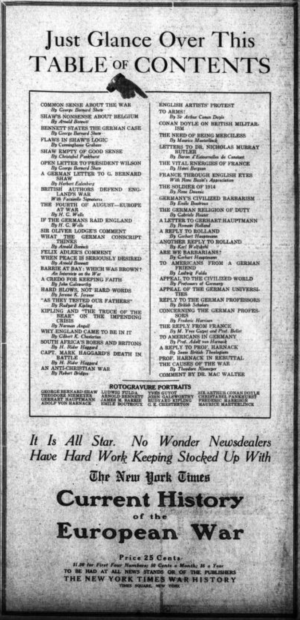
UC Press’s Current History—originally launched as a New York Times supplement in December 1914—is beginning a new chapter. Now with an editorial team led by Lindsay Shingler and Stephan Haggard of the University of California’s UC Institute on Global Conflict and Cooperation, the journal aims to bring fresh voices and new perspectives on the forces defining our time.
In this Q&A with Lindsay Shingler, we hear about her work at IGCC, her vision for the journal, and a glimpse of what’s to come for Current History beginning with the July 2026 issue.
UC Press: Welcome to Current History! We’re excited to have you lead the journal into a new era, and for a deepened partnership with our University of California colleagues.
Lindsay Shingler: Thanks, Jeff. Both Stephen Haggard and I, and managing editor Zethyn McKinley, are glad to have the opportunity to lead Current History. The journal has an incredible history and a whole extended “family” of contributors from all over the world who have contributed to its pages. Current History’s purpose is to document and debate history as it is unfolding in front of us—in other words, current events of such weight and importance, that they are history-in-the-making. I can’t think of a better time for a publication like this, when history is being made every day.
UC Press: Tell us a little about yourself. What have you been up to, and what is it about Current History that brought you to this new editorial leadership role?
Lindsay Shingler: I have worked as a writer and editor for more than twenty years. Prior to joining UC San Diego, much of my work centered on global development policy and practice. I was based in Washington, D.C., for many years and worked quite a lot in Africa. At UC San Diego, I am the associate director of the UC Institute on Global Conflict and Cooperation, a UC-wide research network focused on global affairs, where I lead IGCC’s publications and communications, and support the Institute’s scholars and fellows. IGCC’s extensive global networks of scholars, analysts, writers, and practitioners made it an obvious partner for UC Press in their effort to reimagine Current History.
UC Press: What changes have you planned for the format of the journal?
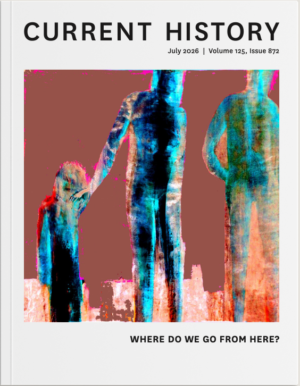
Lindsay Shingler: Starting with our first issue, the July issue, Current History will be published every other month and shift toward the publication of thematic issues rather than regionally focused ones. We have redesigned the journal and enlisted an esteemed artist, Cate Whittemore, to create artwork for each cover that we hope readers find stunning and provocative. We are prioritizing writing that is enjoyable to read and that engages a wide variety of readers, not just scholars and policy wonks. And we are welcoming a broad array of contributors—scholars, writers, journalists, artists, and others from around the world. Issues will include essays, dispatches, interviews, book reviews, and collections prepared by our wonderful community of contributing editors.
UC Press: Aside from format and frequency changes, we’re inspired by your vision for Current History’s voice—your plans to bring in additional perspectives from outside academic silos, to create works that are a joy to read. What can we expect to see in Current History going forward?
Lindsay Shingler: It’s really, really important to us that we engage a wide range of readers and that our pages be an outlet for a diverse contributors.
In terms of readers, we know that there is a giant deluge of analysis available, a lot of it for free, about what’s happening in the world, and we also know that even people whose jobs require them to stay on top of global affairs are finding it hard to tune in these days. We want to provide a couple things: first, analysis that is grounded in expertise, that takes a longer view than the breathlessness of the news cycle, that will inform, surprise, and educate, as opposed to simply enrage or confirm existing views. We also believe that the reason global affairs matters is that people matter—and we think stories about people should be at the center of our work. Approaching issues through stories is a way to make them real and moving again.
In terms of contributors, in the last several decades, Current History has focused most of its attention on scholars based at academic institutions—translating their research for broader audiences. With this model, the journal has published a breathtaking range of ideas and people. We want to continue to engage with scholars, and push them outside their comfort zones to write for more general audiences with writing that delights and informs. We also want to expand to include other expert voices—like writers, journalists, artists, activists. Academic voices are important for helping us understand our world, but they are not the only credible voice.
UC Press: Are there particular authors or topics you’re especially excited to see published in upcoming issues?
Lindsay Shingler: All of them of course. I love all our contributors. But as someone who writes and reads creative nonfiction, I’m excited to bring some of that form to our pages, so look out for that, especially our dispatches from around the world.
UC Press: Thank you again, and best wishes for the future of Current History!
Current History is a leading journal of global affairs that documents, contextualizes, debates, and bears witness to the tectonic, history-making social, political, and economic shifts that shape our world. Published every other month, Current History provides a space for fresh, courageous, intellectually rigorous, and provocative thinking.
online.ucpress.edu/currenthistory
Follow us on: